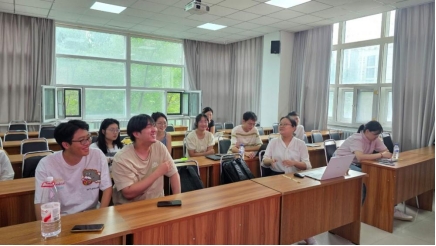
At the invitation of the Northeast Asian Research Center, the School of Northeast Asian Studies, the Northeast Asian Research Institute of Jilin University, and the Northeast Asia Regional Special Committee of the International Cultural Exchange Academic Alliance, Researcher KIM SOOJUNG from the Korea Institute for Industrial Economics and Trade delivered an academic lecture entitled Exploring Pathways for China-ROK Joint International Development Cooperation at Kuang Yaming Building of Jilin University on the morning of August 25, 2025. The lecture was hosted by Associate Professor Xuan Chunji from the School of Northeast Asian Studies, Jilin University.
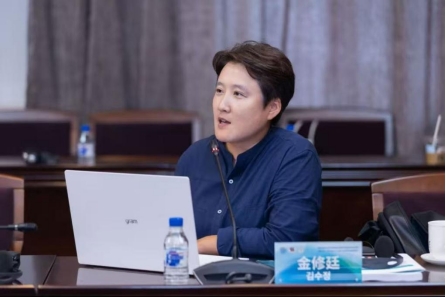
Focusing on China-ROK joint international development cooperation, Researcher KIM SOOJUNG first illustrated the basic connotation of international development cooperation, and then introduced the overall situation, aid scale and cooperative regions of South Korea’s international development cooperation undertakings. She pointed out that China and South Korea boast complementary advantages. Deepening bilateral cooperation can avoid overlapping regional investment and generate sound synergies, with priority cooperation areas covering medical care, education, infrastructure, agriculture and climate response.
The researcher also put forward specific pathways and project proposals for bilateral cooperation, including triangular cooperation and collaboration with international organizations. Two core cooperation projects were highlighted. First, both sides can advance Northeast Asian regional cooperation in China under the framework of the Greater Tumen Initiative (GTI), focusing on transportation, logistics and digital economy. Second, a "China-ROK + X" special joint economic zone can be built among RCEP member states. In this model, South Korea will provide technology and institutional experience, while China will support infrastructure construction and capital investment. A talent training center will be established to boost industrial development and employment in host countries.
She noted that East Asian cooperation is upgrading toward eco-friendly industrial cooperation. Joint China-ROK cooperation can support developing countries, facilitate East Asian economic expansion and advance global carbon neutrality goals. The lecture received enthusiastic responses from students. Participants conducted in-depth and friendly interactive exchanges with Researcher KIM SOOJUNG, gaining valuable insights and academic inspiration.