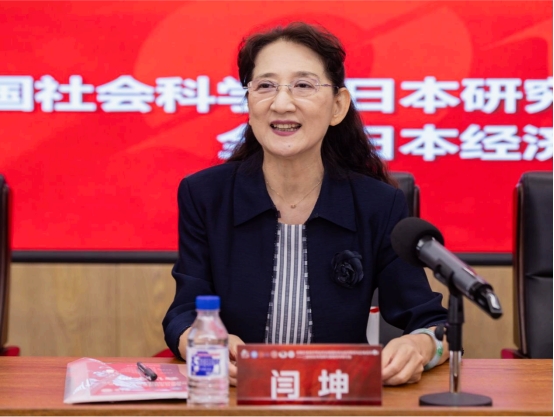
On September 6, 2025, the above symposium kicked off at Jilin University. Co-sponsored by the National Association of Japanese Economics, the Institute of Japanese Studies of the Chinese Academy of Social Sciences (CASS) and Jilin University’s Northeast Asian Research Center, it was undertaken by the university’s Institute of Social Sciences, Northeast Asian Research Institute and Institute of Japanese Studies. Zhao Zhimin, Member of the Party Leadership Group and Secretary-General of CASS, and Han Xiping, Deputy Party Secretary of Jilin University, delivered opening speeches. The ceremony was presided over by Yan Kun, Party Secretary of CASS Institute of Japanese Studies.
Zhao Zhimin noted that 2025 marks the 80th anniversary of the victory of the Chinese People’s War of Resistance Against Japanese Aggression and the World Anti-Fascist War, making the event exceptionally meaningful. Over five decades since the normalization of bilateral diplomatic ties, Sino-Japanese economic and trade relations have acted as a ballast stone and driving force. Despite periodic twists and turns, economic cooperation keeps advancing, and the two countries have formed deeply interdependent economic bonds. Peace, friendship and cooperation are the only viable choice for both sides. He urged researchers to build multi-level communication channels, enhance mutual trust and contribute to a new pattern of Sino-Japanese economic relations under the guidance of Xi Jinping Thought on Socialism with Chinese Characteristics for a New Era.
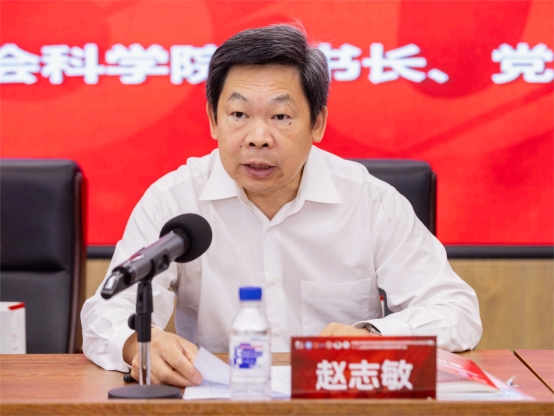
Han Xiping quoted General Secretary Xi Jinping’s remarks on the great rejuvenation of the Chinese nation and the noble cause of global peace and development. As a prestigious university with a revolutionary legacy, Jilin University has long attached importance to Northeast Asian and Japanese studies. Given the transforming international landscape, the conference theme is highly pertinent. He hoped scholars would produce high-quality research to support Chinese modernization and national opening-up strategies.
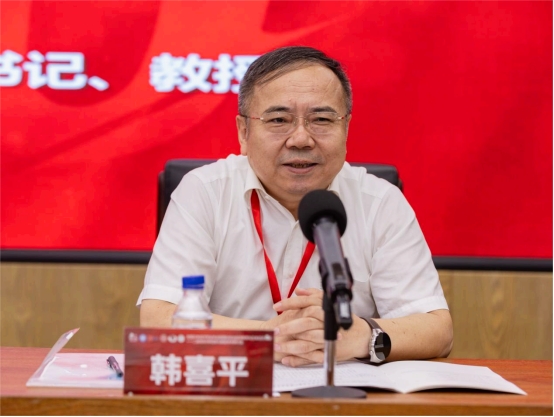
As President of the National Association of Japanese Economics, Yan Kun stated that Japan’s economy has experienced post-war recovery, rapid growth, steady development and prolonged stagnation amid sweeping changes to the global political and economic order. She expected participants to share insights, inspire innovation and advance studies on Japan’s economy and Sino-Japanese relations.
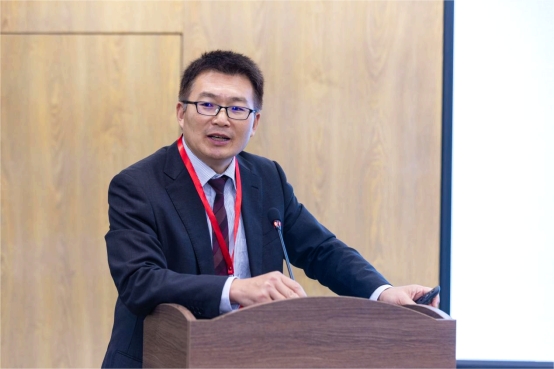
The academic report session was chaired by Cui Jian, Vice President of the association. Four experts delivered keynote speeches. Zhang Jifeng said Japan remains a major developed economy, creditor and trading power despite its decades-long economic slowdown. He called for Japan economy research based on China’s independent knowledge system, with interdisciplinary thinking and objective data.
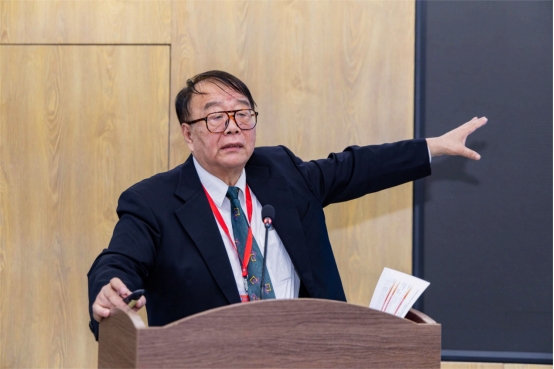
Wu Hao pointed out that the international order exerts profound influence on export-oriented economies like Japan. As a key U.S. ally, Japan has to coordinate its interests with the United States, which complicates policy-making. All countries now need to strike a balance between economic growth and national security amid global turbulence.
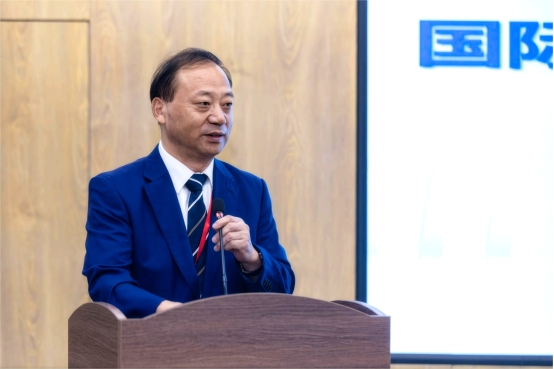
Chen Zilei held that China and Japan are both undergoing economic restructuring with closely integrated interests. The two sides should deepen cooperation via existing mechanisms, stabilize industrial and supply chains, uphold multilateralism and safeguard the WTO-centered trading system.
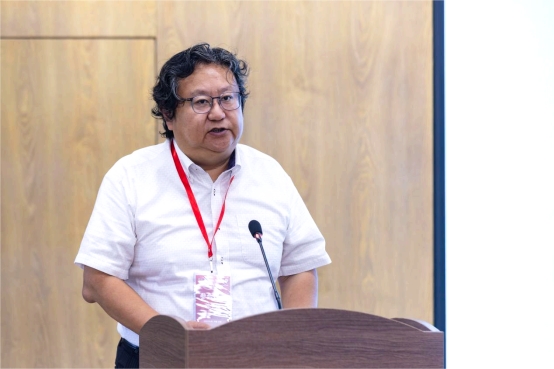
Zhang Yulai argued that over-reliance on GDP fails to fully evaluate Japan’s economy. Beyond modest GDP growth in recent decades, Japan boasts abundant national wealth, sound social development, advanced technologies and fine craftsmanship. A multi-dimensional evaluation system is therefore necessary.
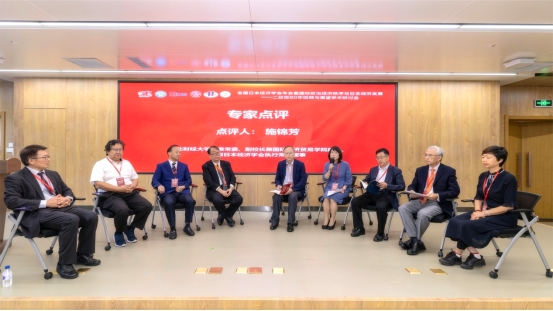
The keynote comments session was hosted by Cui Yan, also Vice President of the association. Shi Jinfang, Pang Deliang, Song Yaoming and Cheng Xinxuan offered professional comments from various perspectives.
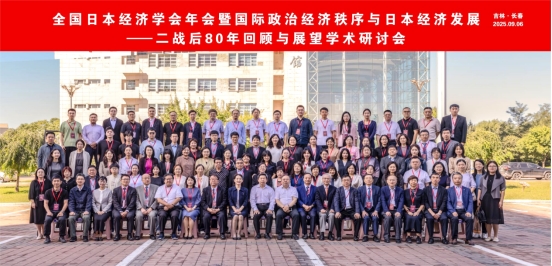
Four parallel sessions were arranged, focusing on post-war international order and Japan’s economy, Sino-Japanese trade amid tariff frictions, digital and green economy cooperation, as well as industrial chain restructuring and economic security. More than 100 scholars from universities and research institutions nationwide attended the event.
Guided by Xi Jinping Thought on Socialism with Chinese Characteristics for a New Era, participants discussed Japan’s economic evolution, Sino-Japanese trade trends, economic transformation, industrial policies, population aging, social security and Northeast Asian regional cooperation. The symposium effectively advances domestic research on Japan’s economy and promotes bilateral exchanges and cooperation.