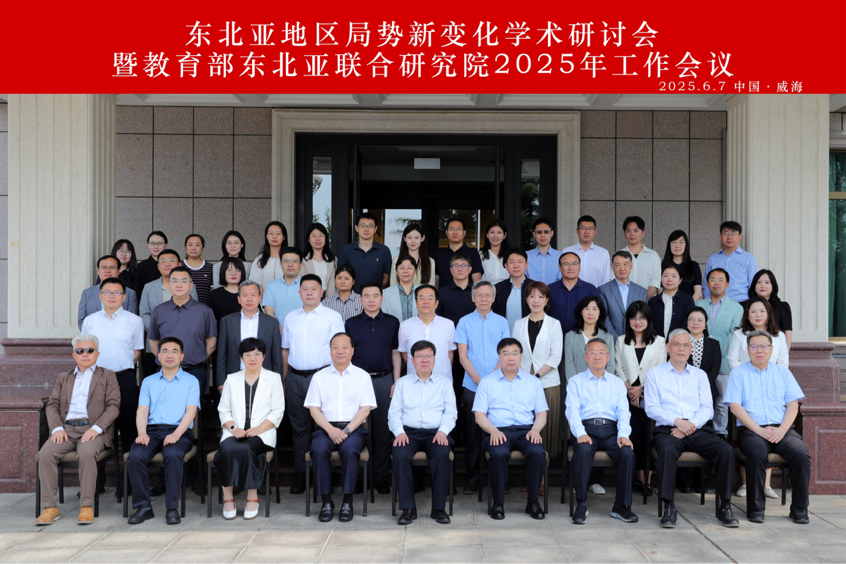
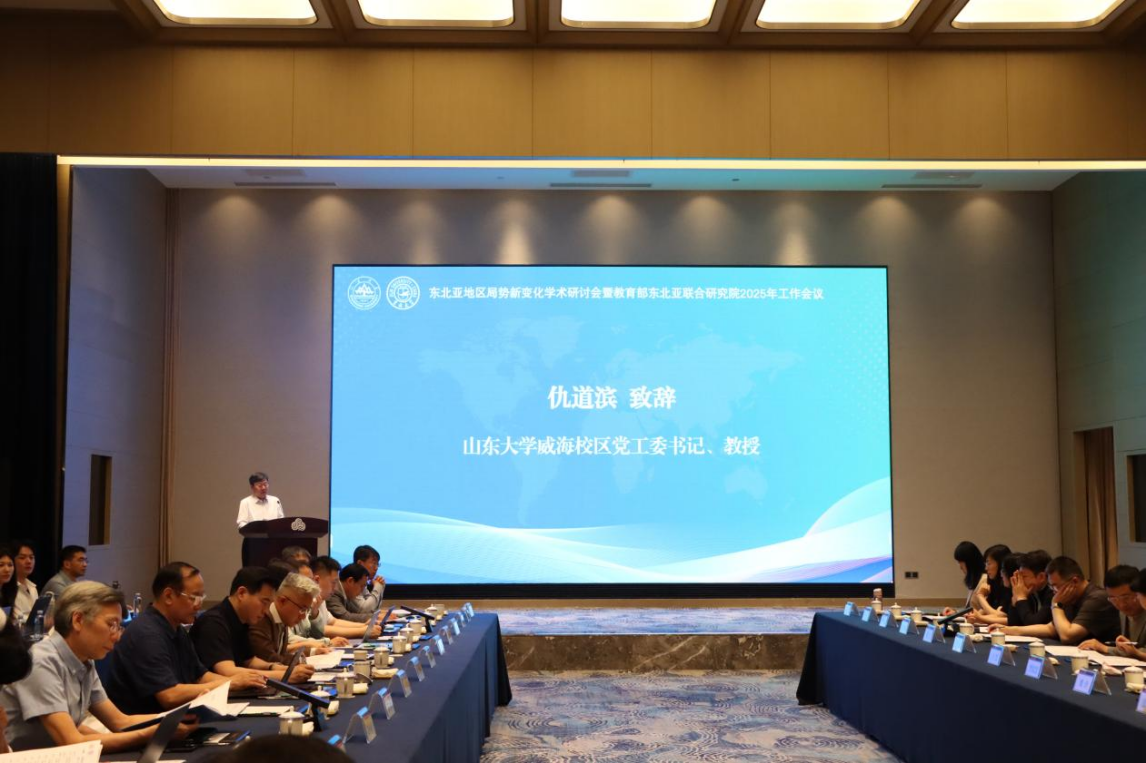
From June 6 to 7, 2025, the Academic Seminar on New Changes in the Northeast Asian Regional Situation and the 2025 Working Conference of the MOE Joint Northeast Asian Research Institute was successfully held in Weihai. Hosted by the MOE Joint Northeast Asian Research Institute and co-organized by the School of Northeast Asian Studies of Shandong University and the Northeast Asian Research Institute of Jilin University, the conference attracted over 50 experts and scholars from nearly 20 universities and research institutions, including the Party School of the Central Committee of CPC (National Academy of Governance), Peking University, Fudan University, Nankai University, University of International Business and Economics, the Chinese Academy of Social Sciences, and China Institutes of Contemporary International Relations. Qiu Daobin, Secretary of the Party Working Committee of Shandong University Weihai Campus, attended and addressed the opening ceremony.
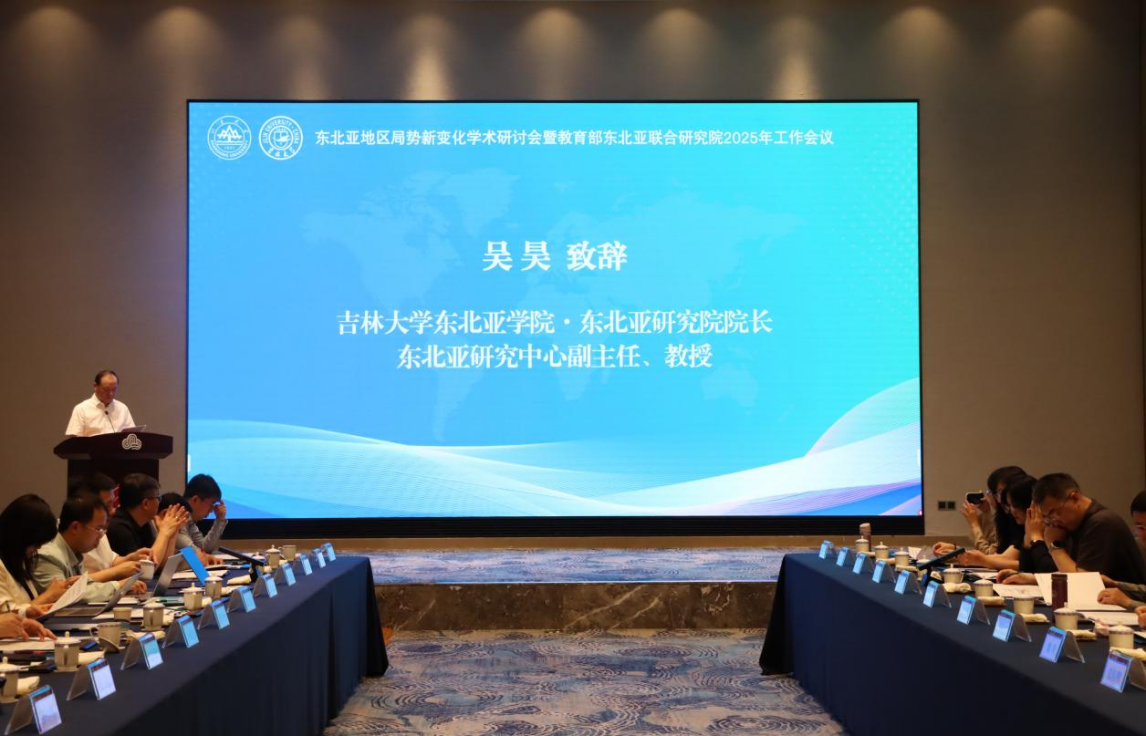
In his speech, Professor Wu Hao, Dean of the Northeast Asian Research Institute of Jilin University, pointed out that Northeast Asia constitutes a vital neighboring region for China. In-depth regional and country studies on Northeast Asia meet both contemporary needs and national strategic demands. As an academic community dedicated to integrating national high-level research resources on Northeast Asia, the MOE Joint Northeast Asian Research Institute expects all member institutions and scholars to actively support its development and contribute to building China’s independent knowledge system for regional and country studies.
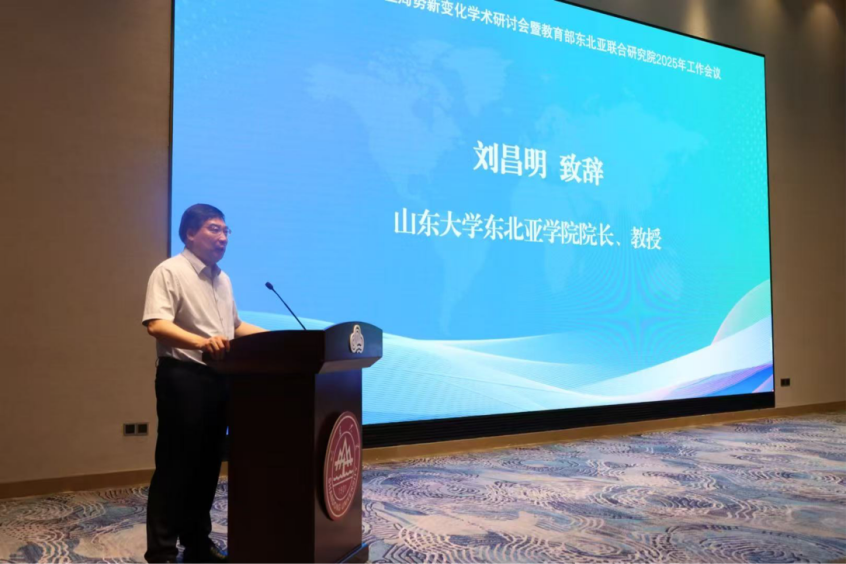
Professor Liu Changming, Dean of the School of Northeast Asian Studies of Shandong University,
noted that strategic adjustments in the United States’ China policy have increased uncertainties and instability across Northeast Asia. In-depth research on emerging regional features and trends is of great strategic significance. He briefly introduced the school’s strengths in disciplinary development, talent cultivation, academic team building, research platforms and international exchanges, and expressed willingness to strengthen cooperation with peer institutions to advance disciplinary construction and talent training in Northeast Asian regional studies.
During the academic seminar, scholars conducted in-depth discussions on major topics, including the geopolitical impacts and countermeasures of Trump’s second term on Northeast Asia, regional cooperation amid intertwined economic shocks and security games, and new domestic and diplomatic trends of Northeast Asian countries. Professors Liu Xuelian, Wang Xiaoke, Zhang Huizhi and Zhao Yang from Jilin University delivered respective speeches on new changes in Northeast Asian geopolitics and China’s responses, emerging trends in U.S.-Japan-ROK security cooperation under Trump 2.0, China-ROK cooperation amid U.S. tariff shocks, and the dilemmas, causes and coordinated revitalization strategies for multidimensional differentiation in Northeast China.
Combining historical context and practical challenges, participants interpreted the latest regional changes from political, economic and security perspectives, putting forward both theoretical discussions and targeted countermeasure proposals to support peace, stability and development in Northeast Asia.
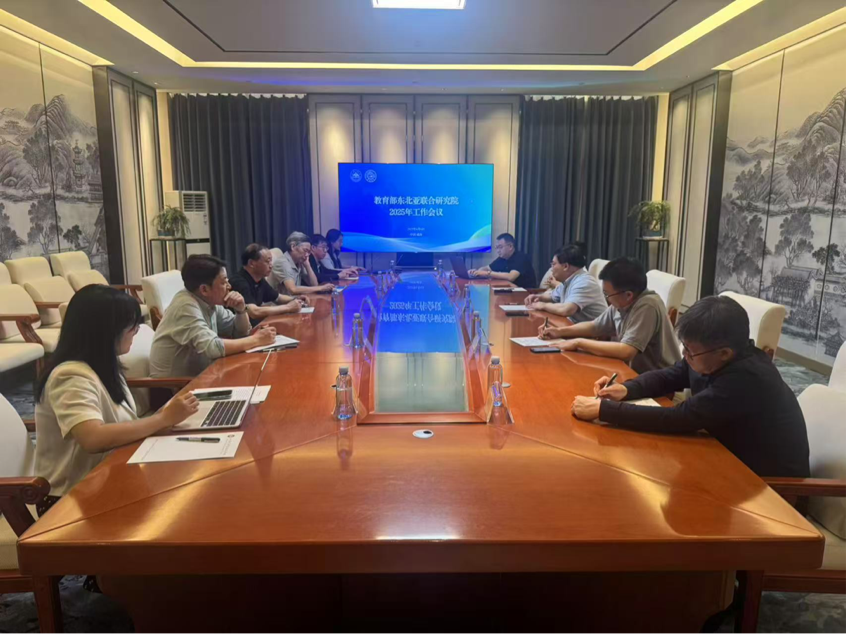
On the evening of June 6, leaders of all member institutions held a special working conference to exchange experience in disciplinary development, student enrollment, talent training, scientific research, think tank construction and international cooperation.
Guided by the spirit of the Central Conference on Neighborhood Affairs, the conference explored key issues concerning Northeast Asian regional cooperation and the building of a community with a shared future in surrounding areas. It carries important theoretical and practical significance for analyzing the evolving Northeast Asian situation and advancing the construction of regional and country studies disciplines in China.